



Anant Kaur, Class 7, Caelum High School

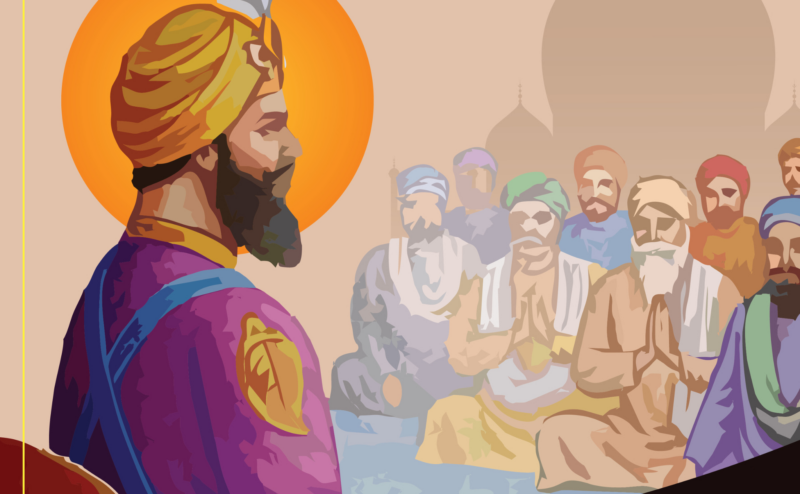
Bandi Chhor Divas, or the “Day of Liberation,” is a significant Sikh festival that often coincides with the Hindu festival of Diwali. While both are celebrated with lights and fireworks, they commemorate distinct historical events. For Sikhs, Bandi Chhor Divas recalls the inspiring story of their sixth Guru, Guru Hargobind Ji, and his courageous act of compassion and justice.
In the early 17th century, the Mughal Emperor Jahangir unjustly imprisoned Guru Hargobind in Gwalior Fort along with 52 Hindu princes. When Jahangir, moved by the Guru’s wisdom, offered his release, Guru Hargobind refused to leave without the other prisoners. Jahangir cunningly agreed, stating that only those who could hold onto the Guru’s robe could walk out with him. Guru Hargobind ingeniously had a special robe made with 52 tassels, allowing each prince to hold one and walk free alongside him.
Upon his return to Amritsar, which happened to be the same day as Diwali, the city’s inhabitants rejoiced. They lit thousands of lamps to celebrate his return and the liberation of the 52 princes. This act of selfless leadership is the core of Bandi Chhor Divas. The occasion teaches Sikhs the importance of freedom, justice, and fighting for the rights of the oppressed.
Today, Sikhs celebrate by illuminating gurdwaras and homes, holding religious processions (nagar kirtan), and serving free meals (langar) to reinforce the values of equality and service. The spectacle at the Golden Temple in Amritsar, adorned with thousands of lights, attracts visitors from around the globe. Thus, Bandi Chhor Divas and Diwali together create a beautiful tapestry of light and meaning, celebrating the triumph of good over evil and freedom over oppression.
November, 2025