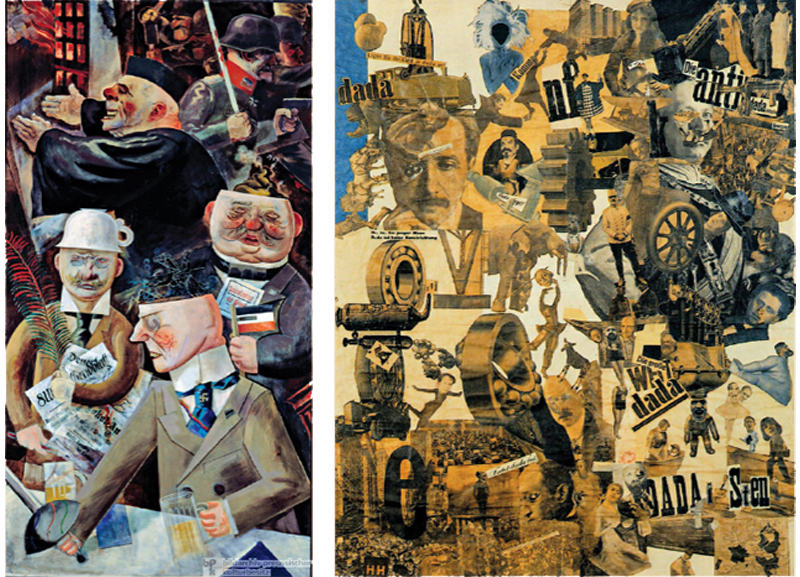






Dadaism was founded by writer Hugo Ball. It was established in 1916 in Zurich, Switzerland, during the Great War (1914-18), which left 10 million dead and some 20 million wounded. An avant-garde movement, Dadaism was wildly experimental and controversial. The Dadaists were anti-war and believed in modern views like peace, love and equality. It is thus said to be a form of artistic anarchy born out of disgust for the social, political and cultural values of the time. Dadaism spread from art to music, poetry, theatre, dance and politics. It wasn’t much of a style of art, like Cubism or Fauvism, but more of a protest movement with an anti-establishment manifesto.
























Powered by WhatsApp Chat