


The constitution is the fundamental law of a nation that outlines the powers and limitations of the government and the rights and duties of citizen. It is an essential document that sets the framework for the governance of a country and serves as a safeguard against abuse of power. The importance of constitution cannot be overstated, particularly during the period between 13th and 15th centuries when constitutional developments were taking place in many European Nations.
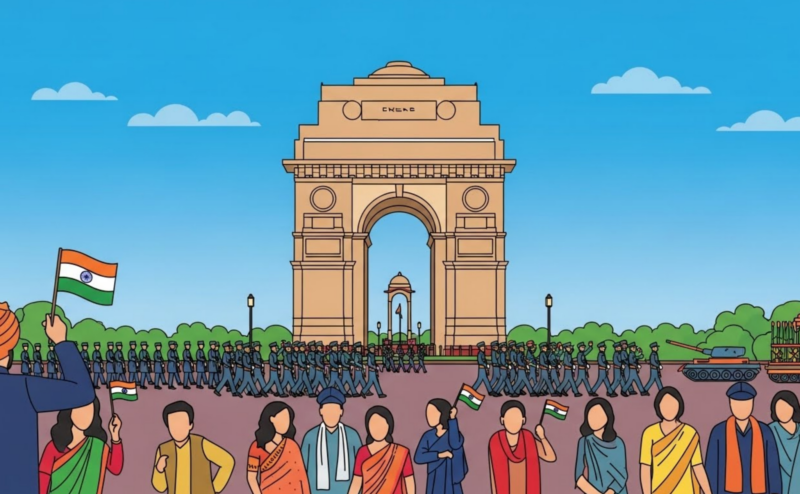
The Constitution of India is a document containing the framework of the political system, the duties, rights, limitations and structure of the government that this nation ought to be followed. Every year on 26th January we celebrate Republic Day. It was on the day in 1950 that the Constitution of India became effective. Although Dr. Babasaheb Ambedkar is known for his prominent role in drafting the constitution, it was the fruit of the hardwork of 299 people.
Unlike the British Constitution, ours is written with no ambiguity. It focuses on minutest aspects of political, executive and legal systems of the country and it also focuses on the fundamental rights and duties of the citizens of India.
After many debates and deliberations, representatives of Indian people drafted the Indian Constitution. It was made by a Constituent Assembly which was formed in 1946. Dr. Rajendra Prasad was chosen as the President. A drafting committee was formed and Dr. Ambedkar was the Chairman. This creation took a total of 166 days, divided across a two-year, eleven months and eighteen-day period.
The Preamble was eventually included in Indian constitution. There is no preface in the original constitution. The Preamble’s declared goals are to achieve justice, liberty and equality for all people as well as to foster brotherhood in order to safeguard the nation’s duty of unity and integrity.
The Constitution of India is crucial in maintaining the country’s democratic framework. It is more than just a legal document; it is the backbone of the country’s background, governance and democratic ideals. It embodies the vision of founders of modern India. As the students, understanding the Constitution is essential to appreciate rights and responsibilities we hold as citizens of India. India is home to many languages, religions and cultures and it guarantees that all individuals have equal rights, thus promoting harmony and unity.
January, 2026