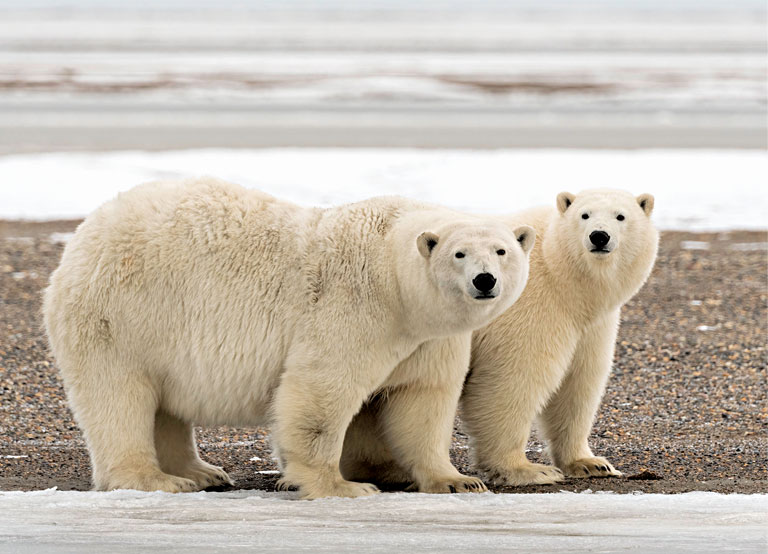




Researchers have found that polar bears living in Svalbard, a Norwegian archipelago, have gained weight and appear healthier despite the reduction of sea ice in the region.

Researchers have found that polar bears living in Svalbard, a Norwegian archipelago, have gained weight and appear healthier despite the reduction of sea ice in the region. Polar bears rely on sea ice to hunt seals, their primary source of food. Scientists had expected declining sea ice to negatively impact their body condition. However, researchers believe the bears may have adapted to changing environmental conditions by supplementing their diet with land-based prey, such as reindeer and walruses, allowing them to gain weight.

DID YOU KNOW?
Polar bears have black skin under their white fur, which plays an important role in helping them survive cold temperatures. Their skin helps them absorb the sun’s heat, helping them stay warm.